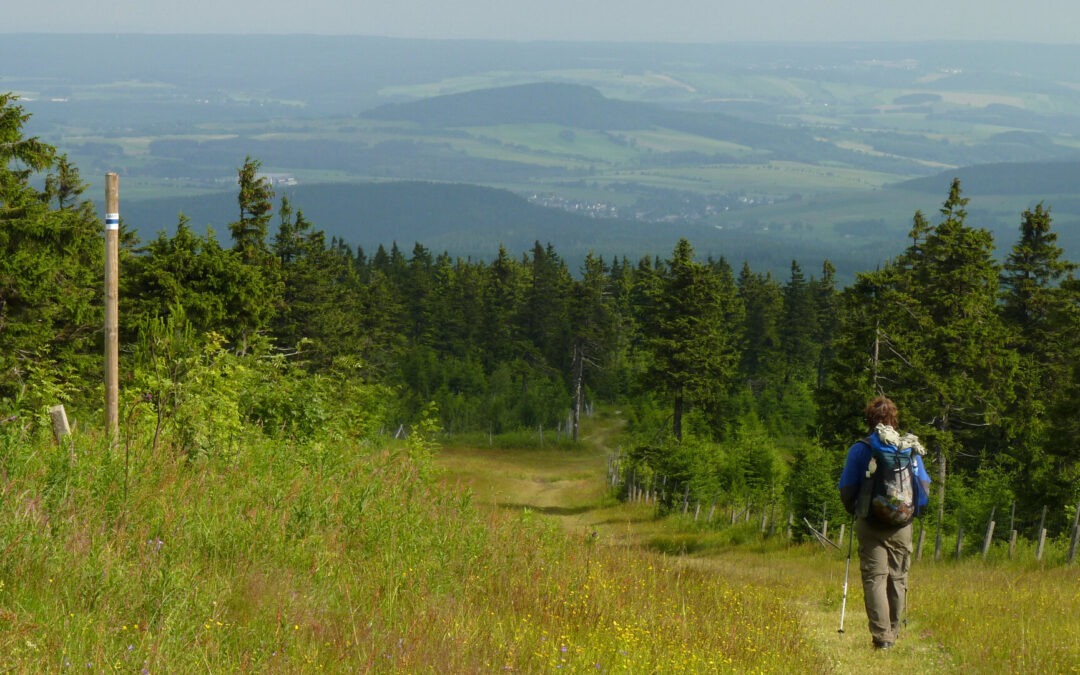
The Germans have a passion for hiking—an extraordinary one. And it’s no surprise, really. With Germany’s incredible variety of breathtaking landscapes, there’s something for every taste. You can explore mudflats on a coastal hike, wander through heathlands, lake districts, or along picturesque rivers. Stroll through vineyards, past industrial landmarks, castles, and fortresses, or venture into the forests and fields of the hilly landscapes of central Germany. For those seeking more of a challenge, there are alpine mountain tours that will test your limits.
It’s no wonder that Germany ranks among the top hiking destinations in Europe. Whether you’re a beginner looking for a relaxed stroll or an experienced hiker seeking demanding climbs, you’ll find an impressive range of options here.
In this article, we’ll introduce you to some of the best hikes in Germany and provide as much useful information as possible about this hiker’s paradise.
In Germany, you can hike all year round. However, the best times are spring and autumn. From March to May, temperatures are usually mild, and you can enjoy blooming landscapes from the North Sea to the foothills of the Alps.
Autumn, from September to early November, also offers mild temperatures and often spectacular autumn foliage, drawing hikers to the forests or heathlands.
In summer, you might prefer the shade of the forests or cooler hikes in gorges and higher elevations. This is also when the hiking season starts on the mountain ridges of the hilly landscapes of central Germany and in the Alps. Alternatively, you can hike along lakes or the coast, where you’ll always have the chance to cool off.
Winter is a quieter season for hiking, but many winter sports areas now clear special winter hiking trails. With the right gear, you can still enjoy fantastic day trips. In snow-covered hilly landscapes, snowshoes or cross-country skis might be your best companions for exploring the outdoors. In Germany, there’s almost always an opportunity to have a memorable hiking day.
Hiking Trails in Germany
How Many Hiking Trails Are There in Germany?
The total length of marked hiking trails in Germany is estimated at 200,000 to 300,000 kilometres (about 125,000 to 185,000 miles). Each year, new trails are added, while others are retired, making the exact number a bit fluid. Dozens of associations, supported by an army of volunteers, maintain these trails, ensuring that everyone can find their perfect path.
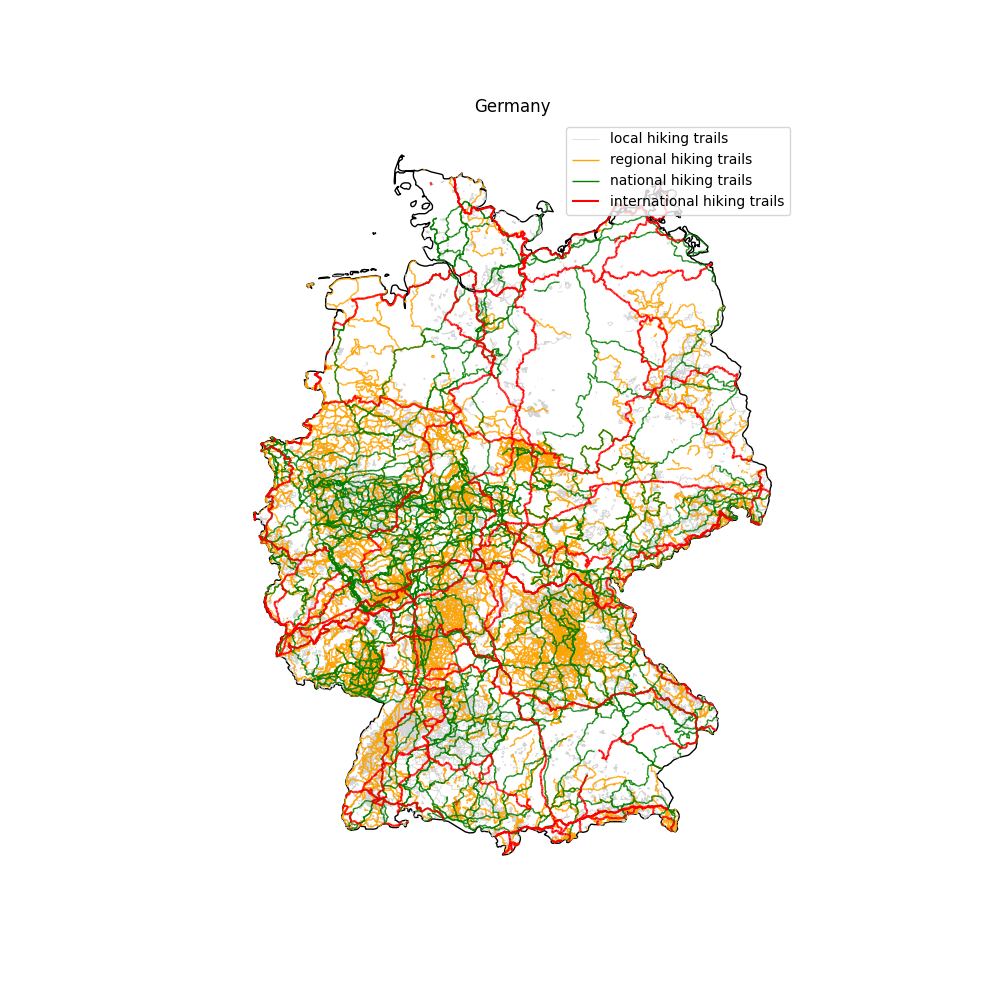
Analysis of the hiking trails in Germany entered in the OSM database.
How Do I Find the Best Hiking Trails in Germany?
To help narrow down the options, the German Hiking Institute awards the “Premium Hiking Trail” quality seal, and the German Hiking Association grants the “Quality Trails – Walkable Germany” (ger.) seal. Choosing one of these certified routes means you can expect a well-maintained trail with minimal asphalt and plenty of stunning views.
If you’re staying in a specific region or on holiday, apps like Komoot or AllTrails are incredibly helpful. They offer user-generated recommendations, complete with detailed descriptions, trail lengths, and difficulty levels. Alternatively, you can visit the nearest tourist information centre, where you’ll often find advice on local hikes, as well as specialized maps and even guidebooks.
What Are the Most Popular Hiking Trails in Germany?
If you’d like to start with some classics, Germany has a wealth of famous hiking trails to explore. Here are some of the most iconic routes, with detailed descriptions and key highlights:
- Length: 320 km (199 miles)
- Location: From Wiesbaden to Bonn, through the Middle Rhine Valley
- Stages: Variable, depending on preferences
- Best Time to Hike: Spring to autumn
- Difficulty: Moderate to challenging, with frequent steep ascents
- More Information: Rheinsteig
The Rheinsteig is one of Germany’s best-known hiking trails, offering stunning views of the Middle Rhine Valley, a UNESCO World Heritage Site. The trail meanders past picturesque vineyards, medieval castles, and historic towns like Rüdesheim and Koblenz. Thanks to its proximity to train lines and towns, hikers can customize their stages or skip sections if needed. Each season offers unique experiences: vibrant blossoms in spring, lush greenery in summer, and colourful foliage in autumn.
- Length: 116 km (72 miles)
- Location: Saxon Switzerland, near Dresden
- Stages: 8
- Best Time to Hike: April to October
- Difficulty: Moderate, with some steep ascents and descents
The Malerweg (Painter’s Path) takes hikers through the dramatic sandstone formations of Saxon Switzerland, a landscape that has inspired artists for centuries. The route is a journey through quiet forests, open viewpoints, and iconic landmarks like the Bastei Bridge and the Königstein Fortress. Its historical significance and serene beauty make it a favourite among nature enthusiasts and art lovers alike.
Heidschnuckenweg (ger.):
- Length: 223 km (138 miles)
- Location: Lüneburg Heath, Lower Saxony
- Stages: 13
- Best Time to Hike: Late summer during the heather bloom (August to September)
- Difficulty: Easy to moderate
- more information: Heidschnuckenweg
This scenic trail winds through the Lüneburg Heath, a unique landscape of rolling heather fields, pine forests, and quaint villages. The Heidschnuckenweg is at its most enchanting during the heather bloom, when vast swathes of land are carpeted in vibrant purple. The gentle terrain makes it accessible to hikers of all levels, and numerous cozy inns offer regional specialities along the way.
Schluchtensteig (ger.):
- Length: 119 km (74 miles)
- Location: Southern Black Forest
- Stages: 6
- Best Time to Hike: Summer
- Difficulty: Moderate to challenging
The Schluchtensteig is a dramatic trail through the gorges and forests of the southern Black Forest. Hikers will encounter cascading waterfalls, rugged rock formations, and serene alpine meadows. Notable highlights include the Wutach Gorge and Lake Schluchsee. The combination of natural beauty and tranquility makes this trail a must for summer adventures.
Saar-Hunsrück-Steig (ger.):
- Length: 415 km (258 miles)
- Location: Saarland and Rhineland-Palatinate
- Stages: 27
- Best Time to Hike: Spring to autumn
- Difficulty: Moderate
This trail is celebrated for its diverse natural beauty, from dense forests and rolling hills to quiet streams and open meadows. The Saar-Hunsrück-Steig offers a peaceful escape with minimal urban interruptions. Key landmarks include the Saar Loop and the gemstone town of Idar-Oberstein. The well-marked paths are ideal for long-distance hikers seeking solitude.
- Length: 313 km (194 miles)
- Location: From Aachen to Trier
- Stages: 15
- Best Time to Hike: April to October
- Difficulty: Moderate
The Eifelsteig showcases the geological diversity of the Eifel region, from volcanic craters and lakes to moorland and limestone cliffs. Cultural highlights include the Roman city of Trier and charming villages along the way. Its combination of natural wonders and cultural heritage makes the Eifelsteig a rewarding journey for nature and history enthusiasts.
Goldsteig (ger.):
- Length: 660 km (410 miles)
- Location: Upper Palatinate and Bavarian Forest
- Stages: 38
- Best Time to Hike: May to October
- Difficulty: Moderate to challenging
Germany’s longest hiking trail, the Goldsteig, offers hikers an extensive network of routes, including cross-border connections to the Czech Republic’s Zlatá Stezka (Golden Trail). The trail features pristine forests, panoramic views, and hidden villages. With nearly 2,000 km of interconnected paths, the Goldsteig provides endless opportunities for exploration.
Rennsteig (ger.):
- Length: 170 km (106 miles)
- Location: Thuringian Forest
- Stages: 6-8
- Best Time to Hike: Spring and autumn
- Difficulty: Easy to moderate
Germany’s oldest long-distance hiking trail, the Rennsteig, combines natural beauty with historical significance. It follows ancient trade routes and borders through dense forests, open meadows, and hilltops. Highlights include the Großer Inselsberg and traditional Rennsteig markers, providing a cultural and scenic experience.
Harzer-Hexen-Stieg (ger.):
- Length: 94 km (58 miles)
- Location: Harz Mountains
- Stages: 5 (plus variants)
- Best Time to Hike: April to October
- Difficulty: Moderate
- more information: Wikipedia
The Harzer-Hexen-Stieg (Harz Witches Trail) traverses the mystical Harz Mountains, connecting natural wonders with folklore. Highlights include the Brocken (Germany’s highest peak north of the Alps) and remnants of mining history. Variants of the trail extend its length and provide alternative routes for adventurous hikers.
You can find additional inspiration at Top Trails of Germany (ger.), an organization dedicated to highlighting Germany’s most beautiful hiking routes. Their curated selection features some of the country’s best long-distance trails, perfect for hikers looking for unforgettable experiences.
Amidst all the incredible long-distance trails, there are countless shorter gems waiting to be discovered. Hiking doesn’t always have to be serious business, as proven by the Franconian Brewery Trail (ger.). This 14-kilometre (8.7-mile) circular route takes you through four breweries, where you can stop to sample their offerings in cozy inns. Depending on your pace—and your appreciation for good beer and Franconian cuisine—you might even need a few days to savour this trail fully. This easy route is perfect for beer enthusiasts and anyone wanting to enjoy the culinary highlights of Franconia.
Where Can You Stay While Hiking?
Germany offers a variety of accommodation options to suit every hiker’s preference and budget.
Mountain Huts and Lodges
Mountain huts, operated by alpine associations such as the German Alpine Association (DAV), are not exclusive to the Alps. You’ll also find them in the higher midrange mountains, including the Black Forest, Bavarian Forest, and Ore Mountains. These huts provide basic amenities and are perfect for multi-day hikes, often located near popular trails or peaks. Advance booking is recommended, especially during peak seasons.
Hotels and Guesthouses
Germany’s villages, towns, and cities offer a wealth of guesthouses and hotels catering to hikers. Whether you’re looking for something budget-friendly or luxurious, platforms like Booking.com and TripAdvisor can help you find suitable options. For accommodations specifically catering to hikers, check Nature Hotels.
Youth Hostels
Youth hostels are a practical option for budget-conscious hikers and families. Many are conveniently located near hiking routes and natural attractions. Visit the German Youth Hostel Association for a list of hostels across the country.
Camping and Campsites
Camping is a fantastic way to connect with nature while hiking in Germany. With over 2,100 campsites across the country, you can find options ranging from simple pitches to well-equipped facilities for caravans. Camping.info and Pitchup.com offer searchable directories and user reviews to help you find the perfect spot.
For more adventurous hikers, naturcamping.net is an invaluable resource. This German site lists legal bivouac and trekking camping spots across the country. While most locations require reservations and can book out months in advance during peak season, they provide a unique way to experience Germany’s wilderness legally and responsibly.
Wild Camping Regulations
Wild camping is prohibited in Germany and is strictly enforced, especially in nature parks and protected areas. To stay on the right side of the law, always use designated camping areas or consider private camping options where landowner permission has been granted.
Alternative Accommodations
For a unique experience, consider mountain hotels or inns offering hiking packages. These are often located directly along popular trails, blending comfort with convenience. Platforms like Escapio highlight charming mountain stays in picturesque locations.
What Gear Do You Need?
Hiking in Germany usually doesn’t require specialized gear. If you stick to regular trails and have healthy joints, a good pair of sports shoes with decent grip will often suffice. Trail running shoes or low-cut hiking shoes are excellent choices for most routes. For longer distances or more challenging terrain, trekking poles can be a helpful addition.
A rain cover for both yourself and your backpack is essential. Even in midsummer, sudden thunderstorms are common in some regions, and spring and autumn tend to be wetter seasons. While recent years have seen drier weather in Germany, a rain jacket that doubles as a windbreaker is a must-have for any hike. For shorter day trips with a low chance of rain (e.g., 10%), a lightweight festival poncho might do the trick.
If you’re hiking in winter, it’s wise to carry at least a pair of microspikes (Grödel). These lightweight traction aids can help you safely navigate icy sections or steps, even on seemingly easy trails.
How to Replace or Supplement Your Gear
If you need to replace or supplement your gear during a longer hike in Germany, you have plenty of options. From large retail chains to small independent shops, Germany offers a robust network of outdoor gear suppliers, both in-store and online.
Major Outdoor Retailers
- Globetrotter: One of Germany’s largest outdoor retailers, with 21 stores nationwide. They offer a wide range of products and services, including gear rentals and some repair options. Globetrotter
- Decathlon: An international sporting goods chain with over 80 stores in Germany. Known for its affordable prices and diverse selection, Decathlon caters to both beginners and seasoned hikers. Decathlon
- Intersport: A global retailer with many locations in Germany, offering a mix of outdoor and sports equipment. Intersport
Independent Outdoor Shops
Smaller, independent outdoor stores are still thriving across Germany, particularly in smaller towns where the larger chains might not be present. These shops often provide personalized service, local expertise, and sometimes niche products not commonly found elsewhere. Some have also grown into significant online retailers, even starting from humble beginnings. bergfreunde.de, bergzeit.de and sport-conrad.de are amongst the largest of those. While the online presence of independent outdoor shops varies, they remain a valuable resource for hikers in need of gear or advice.
Online Shopping and Delivery
The major online shops, including large retailers like Globetrotter, Decathlon, and Intersport, as well as dedicated online stores such as Bergfreunde, Bergzeit, and Sport Conrad, have robust platforms offering delivery within 2-3 days via services like DHL or other couriers. If you’re in a remote area, locals can often recommend the most reliable delivery service. Many online stores allow you to choose your preferred courier during checkout.
If you need gear urgently, express delivery options from DHL Express or UPS can ensure fast replacements. Alternatively, you can call ahead to a store in the nearest city to check availability and pick up the item yourself.
Repairs and Replacements
While repairs might take longer than a quick replacement, some stores, especially Globetrotter, offer repair services. In rural areas, independent shops may also be able to provide minor fixes or recommend a local service.
By combining these resources, from major chains to independent shops, you can address gear issues quickly and efficiently during your hiking adventure in Germany.
Food Supplies: How to Keep Yourself Fed While Hiking
To restock your food supplies during a hike, your best option is to visit a supermarket in the next town you pass through. Very few hotels or guesthouses provide packed lunches. Most supermarkets open between 7:00 and 8:00 AM and close between 8:00 and 10:00 PM. However, keep in mind that they are typically closed on Sundays and public holidays. Smaller stores often have even shorter hours, sometimes including a midday break.
If you find yourself needing food when everything else is closed, larger gas stations are a reliable option. While the selection is usually limited to snacks and basic items, it’s better than going hungry.
Bakeries are another great resource, as many open on Sunday mornings. They often sell fresh bread and rolls, and some even offer simple lunches, which can be taken to go or enjoyed on-site. Butcher shops occasionally serve affordable meals as well, which can be a good alternative when restaurants or cafes are unavailable.
Restaurants and cafes generally stay open on weekends, but many close for 1-2 days during the week, most often on Mondays. Wednesday and Thursday closures are also common.
For finding open supermarkets, restaurants, or cafes—or even the nearest gas station as a last resort—Google is an excellent tool to help you locate what you need.
Drinking Water – Tips for Staying Hydrated on the Trail
The best way to ensure a reliable water supply during your hike is to fill your bottles in the morning, especially if you’re staying in a hut, hotel, or guesthouse. Tap water in Germany is safe to drink everywhere, so there’s no need to rely on bottled water from supermarkets.
Avoid Natural Water Sources
You should avoid drinking water from rivers, streams, or lakes, even with a portable water filter. Centuries of mining activities have left some areas, even in national parks, with residual heavy metals or toxins that portable filters can’t fully remove. In agricultural regions, water quality is often compromised by runoff, making these sources equally unreliable.
Refill Stations and Cafés
Access to the drinking water network is essential for staying hydrated. You can refill your bottles during a café or restaurant stop—most places will happily fill them if you’ve ordered something. Additionally, many cities now feature public drinking fountains, especially during the hot summer months. These are usually operational from May or June through October and are marked in common mapping apps like Google Maps.
Be Cautious with Fountains
Decorative fountains often start the season with clean tap water, but they typically switch to recirculated water, which is unsuitable for drinking. In an absolute emergency, you can use water from these fountains after thorough filtering, but inspect the area carefully. Look for signs of living algae (green, not blue) or moss near the water to ensure it’s not treated with harsh chemicals. Remember, decorative fountains should only be considered as a last resort, and a nearby drinking fountain is often available.
Livestock Troughs in Rural Areas
In rural landscapes or small villages, you may occasionally come across livestock troughs with running water. Unless explicitly marked as potable, these should be treated with the same caution as fountains. The water is typically safe enough for animals, so a high-quality water filter should make it drinkable for humans as well.
By planning ahead and knowing where to look for water, you can stay safely hydrated on your hike without resorting to bottled water.
Quick Info for Travellers to Germany
Language: German
Communication: Standard German is widely understood, though local dialects can sometimes pose a challenge. In the tourism sector, most people will switch to standard German if needed and many can communicate in basic English.
Currency: Euro (€)
Payment Methods: Debit cards (EC cards), credit cards, and cash are all commonly used. However, some smaller establishments still prefer cash, so carrying a small amount is recommended.
Time Zone: Central European Time (CET)
Germany is a central hub in Europe with excellent international connectivity:
- By Air: Major international airports include Frankfurt/Main, Munich, and Berlin, which serve as the main entry points. Many regional airports, such as Hamburg, Düsseldorf, or Stuttgart, also handle international flights and may be more convenient for certain regions.
- By Train: Germany is well-connected to its neighbours via international rail services, including high-speed trains (e.g., ICE, TGV, or Eurostar). Overnight trains (like Nightjet) are a convenient option for reaching various cities while saving on accommodation. Be aware, though, that delays are not uncommon due to ongoing infrastructure upgrades by Deutsche Bahn. Allow for some flexibility in your schedule.
- By Bus: Long-distance bus lines like FlixBus or Eurolines complement the rail network and are often a more affordable way to travel. They can also reach destinations that are less accessible by train.
Germany has a reliable public transportation system, particularly for reaching trailheads:
- Regional Trains: Regional rail services connect even remote corners of the country. Most starting and ending points of major long-distance hiking trails are accessible by train.
- Buses: Local buses cover areas not served by trains. In rural regions, bus services can be infrequent, sometimes operating just 2-3 times a day (and even less on weekends).
- On-Demand Services: Many regions now offer on-demand buses (Rufbusse) as a flexible option for public transport. These services usually require advance booking and are available to tourists for a small fee. While more flexible than fixed schedules, they should not be confused with taxis.
With careful planning and the use of online resources (like DB Navigator for trains and local apps for buses), getting around Germany to explore its hiking trails is straightforward and efficient.
Germany has a highly reliable electrical grid, so staying charged while hiking is rarely an issue. The standard voltage is 230V at 50Hz, and Germany uses Type C (Europlug) and Type F (Schuko) outlets. If your devices use a Europlug, you won’t need an adapter. However, travelers from outside Europe, such as North America, will need a plug adapter and may also require a voltage converter, depending on their devices.
For hikers, carrying solar panels or other renewable energy options is generally unnecessary. Most will find themselves staying at a campsite, hut, hotel, or guesthouse within a few days, where they can recharge devices easily. Instead of bringing heavy equipment like solar panels—which may not perform well due to Germany’s moderate sun angles—it’s more practical to pack one or two power banks and a multi-USB charger. This way, you can share limited outlets with other travelers and keep your devices running smoothly.
Stick to lightweight and efficient charging solutions to avoid unnecessary weight and complexity on the trail.
Safety & Emergencies
Germany is a very safe country for hiking. Aside from the occasional pickpocket or opportunistic theft of unattended gear—risks you face worldwide—there are few dangers from people or animals in hiking areas.
Wildlife
While wolves and lynxes have returned to Germany, they generally avoid humans. The main animals to watch out for are wild boars, particularly if you encounter a mother with young during twilight or early evening. Give them a wide berth and stay calm.
If you see warning signs about livestock guardian dogs, take them seriously. These dogs protect flocks from predators and can be territorial. Often, you can pass without issue, but if the dogs seem aggressive, it’s better to find an alternate route.
Plants
While Germany has few contact-poisonous plants, you should only touch or collect plants you can confidently identify and know are safe. This is especially true for foraging. Some of Europe’s most toxic plants, like autumn crocus, foxglove, and monkshood, are common in Germany and can be deadly even in small doses. Many less-toxic relatives can also be dangerous if consumed improperly.
Emergency Numbers and Preparedness
If you have an accident, dial 112 for emergency assistance. Germany’s mobile network coverage is improving but still has gaps in remote areas, especially in rugged terrain or national parks. For solo hikers, it’s vital to inform someone of your route and expected return time.
In mountainous areas, contact the mountain rescue service for assistance. Remember that these rescuers are dedicated volunteers, not a taxi service for exhausted or unprepared hikers. They give up their own time to save lives, so be respectful of their efforts. If weather conditions like storms, fog, or heavy rain make rescue impossible, delays could mean fatal consequences.
Self-Protection and Planning
Good preparation is essential, especially in remote areas such as mountains, coastal regions, or dense forests. While a stroll in a spa park might end with just a scare, being unprepared in the wilderness can lead to life-threatening situations. Plan your route, know the conditions, and respect the environment to ensure a safe and enjoyable hike.
Where to Find More Information About Hiking in Germany
If you’re looking for more details about hiking trails, accommodations, or tips for hiking in Germany, there are plenty of helpful resources:
- German Hiking Association (Deutscher Wanderverband): As the umbrella organization for hiking associations across Germany, they provide a wealth of information and advice about hiking. They maintain the website Wanderbares Deutschland (ger.) that features over 700 hiking trails ranging from short walks to long-distance routes. You’ll also find tips, tricks, and links to the local tourism offices or associations managing each trail.
- One of the best sources for inspiration for your next hike can be found on the Webpage of the German National Tourist Board. Here you find a portrait of many high quality hiking trails, gorgeous pictures and basic information.
- Hiking Bloggers: Personal experiences and trail recommendations from hikers such as withoutapath and the-green-spot can offer valuable insights and inspiration. Though there are not many blogs dedicated to just Germany. Most hikers don’t stop at the borders, but just keep going to the next country. And once they have been outside Germany, they usually just continue to explore the world.
- Travel Agencies and Websites: Many agencies specialize in hiking tours in Germany and can provide tailored recommendations. Check with local tourist information centres for additional guides, maps, or custom advice.
Germany truly is a hiker’s paradise, offering something for everyone—from beginners looking for gentle strolls to experienced adventurers seeking challenging climbs.
But hiking doesn’t have to stop at Germany’s borders! Austria offers trails with a shared language and stunning alpine landscapes. France, Belgium, and the Czech Republic have similarly dense networks of hiking trails. For coastal hikes, consider the Netherlands, Denmark, or Poland—or venture further to Scandinavia. And if you want precision in both your watch and your trail markings, Switzerland is your destination.
Happy hiking, and enjoy exploring the endless trails waiting for you!