
If you love hiking, you know how important it is to bring the right food. The right nutrition can make the difference between a pleasant hike and a tiring ordeal. In this blog post, I want to share healthy and practical food ideas that are not only tasty but also easy to prepare and carry. From nutrient-rich snacks to wholesome meals – here you’ll find everything you need for your next outdoor adventure.

Just as you prepare your gear for your hike, you should also plan your food in advance. Not only does this ensure you have everything you need, but it also helps you avoid bulky, impractical packaging and unnecessary weight.
Good planning allows you to bring food you enjoy, rather than having to settle for whatever you can find along the way.
It’s best to make a shopping list before you set off. Keep these points in mind:
- How long is your hike? A day trip or a multi-day trek?
- For a day trip, you can use fresh food as long as it can be carried without refrigeration.
- The longer the trek, the more durable the food should be (at least until the next resupply point).
- Bring only food that is easy to transport (no raw eggs or ice cream – but you can boil eggs and take a break at an ice cream shop).
- If it comes in bulky packaging, can you repackage it easily?
- This does not apply to ingredients for homemade snacks (except for the “no refrigeration” rule).
Once you’re back from your shopping trip, you can start preparing at home:
- Remove meals and snacks from their often oversized packaging and repackage them into properly portioned, reusable containers or ziplock bags. The only exception is freeze-dried trekking meals that are cooked in their pouches. For everything else, airtight containers like Lock&Lock are great, as they don’t leak. Use plastic containers for hiking, and leave the glass ones at home.
- Prepare your homemade energy bars, energy balls, and other snacks, and repackage them as well.
Plan your water supply thoroughly:
- Calculate your daily water needs per person. Consider the likely weather and terrain. In hot and humid conditions, you’ll need much more water than on a cooler autumn day. On steep sunny slopes, you’ll need more water than on a leisurely forest walk in the flatlands.
- Check where you can refill your water along the way and what backup sources are available if one is dry.
- Determine which water bottles or hydration systems you’ll need and whether you need to bring water filters or purification tablets.
When packing, keep your snacks easily accessible in your backpack. Your main water bottle should also be within easy reach. Your lunch can go deeper in your pack, as can the water reservoir if you’re using one.
If you need to keep something cool on hot days or warm on cold days, wrap it in your spare fleece. This way, you’ll have your backup pullover and won’t need an extra thermal container. The fleece might not be as effective as a vacuum-insulated container, but it’s good enough for most purposes over a short period of time. Ensure that the wrapped item doesn’t leak and isn’t boiling hot (or it might damage the fleece unless it’s wool).
In addition to your main meals and snacks, always carry an emergency reserve for unexpected situations. This could be a handful of dates, other dried fruits, nuts, chocolate, or a few bars of emergency rations. They don’t weigh much but can save you if the path, infrastructure, or weather send your plans on a detour.
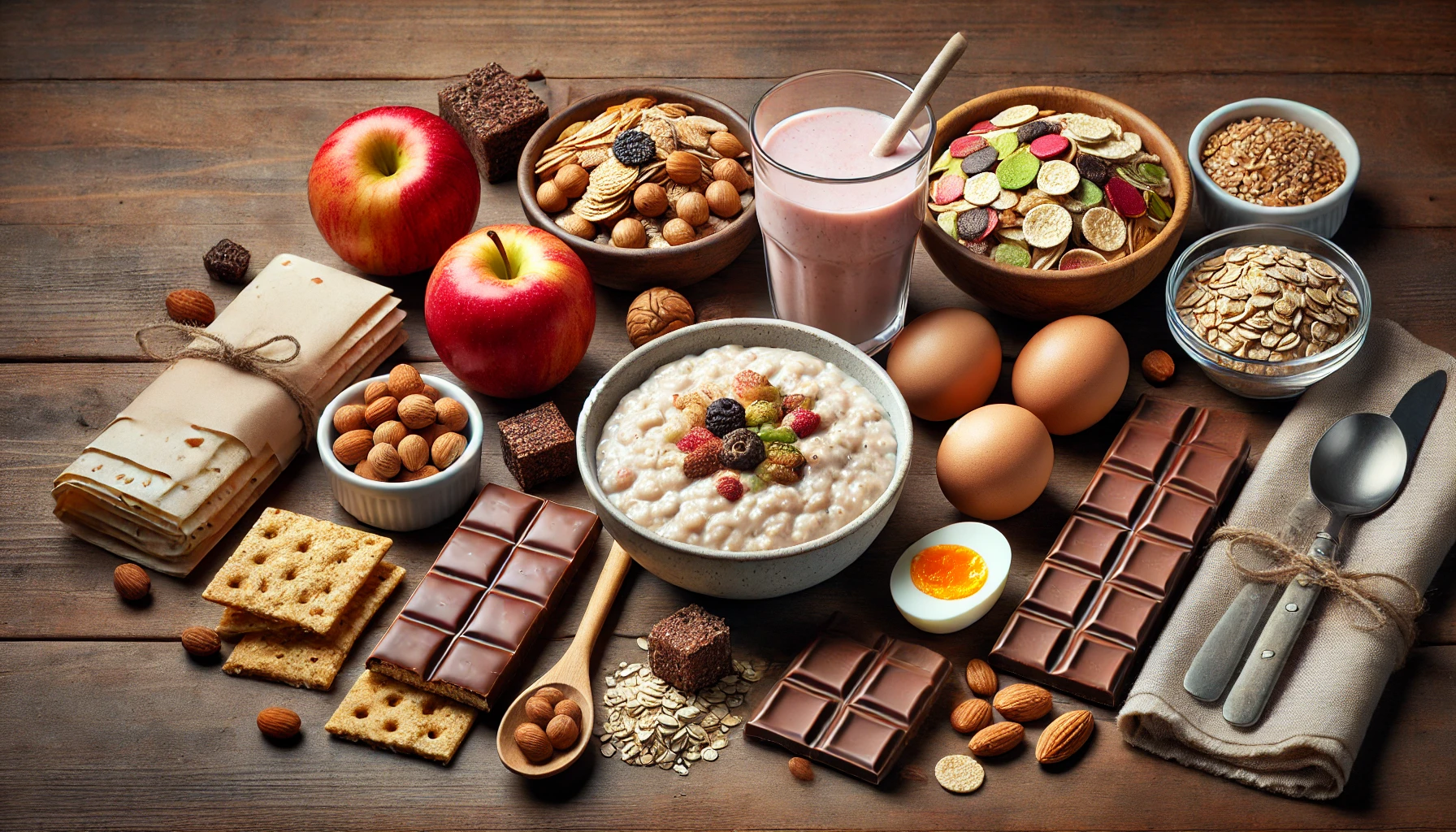
Breakfast Ideas for On the Go
For your breakfast or a quick meal on the trail, you probably don’t want to cook (or do more than heat water). Luckily, there are still great options to fuel you for the day. Here are a few examples:
Oatmeal with Dried Fruits
Ingredients: Oats, dried fruits (e.g., raisins, apricots), nuts, and seeds.
Benefits: High in fibre, long-lasting energy, easy to prepare.
Packaging: Pre-portion in reusable containers or ziplock bags.
Preparation on the trail: Pour hot water or milk (also plant-based) over the mix and let it sit for a few minutes.
Protein-rich Cereal Bars
Options: Buy ready-made cereal bars (look for low sugar) or make your own with nuts, seeds, oats, and honey.
Benefits: Compact, energy-rich, high in protein.
Packaging: Individually wrapped or stored in containers.
Instant Porridge
Ingredients: Instant oats, milk powder (or plant-based milk powder), dried fruits, nuts.
Benefits: Quick to prepare, filling, easy to carry.
Preparation: Mix with hot water or milk and let it sit for a few minutes.
Fruit Smoothies
Preparation: Fruit powder or dried fruit, protein powder, oats.
Benefits: Quick to make, vitamin-rich, refreshing.
Preparation: Mix with water or milk in a shaker.
Nut and Seed Mix
Ingredients: Mix of almonds, walnuts, cashews, sunflower seeds, pumpkin seeds.
Benefits: High in nutrients, good fats, long shelf life.
Packaging: Pack in small portions in ziplock bags.
Energy Balls
Ingredients: Dates, nuts, seeds, cocoa powder, coconut flakes.
Benefits: Compact, energy-rich, long-lasting, no cooking needed.
Preparation: Mix ingredients, form into balls, and store in a cool place.
Great for a small breakfast or as a snack on the go.
Tortilla Wraps
Ingredients: Wholegrain tortillas, peanut butter, bananas, honey.
Benefits: Filling, easy to transport, no refrigeration needed.
Preparation: Prepare at home and pack in foil or containers.
Hard-Boiled Eggs
Preparation: Boil eggs for 10 minutes, let them cool on a clean plate (no need for a fridge).
Benefits: High in protein, filling, easy to transport.
Packaging: Carry in containers or special egg holders.
Black Nougat
Provençal black nougat (“Nougat Noir”) is a sticky mix mainly of honey, almonds, and a bit of red wine (the alcohol evaporates during cooking). It’s incredibly sticky but has earned a permanent spot in our gear as an emergency reserve, often replacing all other breakfast options on self-sufficient tours.
It’s not ideal for day hikes – too sweet. However, on longer trips, it’s hard to resist. It’s for those who like to cook for themselves, as it’s rare and expensive to buy. The ingredients, especially the honey, need to be high quality, and they’re not cheap. Also, you should make it in winter to avoid attracting a swarm of bees to your kitchen. Once cooked, cooled, portioned, and vacuum-sealed, it lasts forever.

Snacks for On the Go
To stay energised on the trail and avoid pulling out a big meal for every small hunger pang, it’s always good to have a few small snacks on hand. Here are some examples:
Nuts & Seeds
- Selection: Almonds, walnuts, cashews, hazelnuts, sunflower seeds, pumpkin seeds.
- Benefits: High in healthy fats and protein, long-lasting, energy-rich.
- Packaging: Pack in small portions in ziplock bags or reusable containers.
Dried Fruits
- Selection: Raisins, apricots, mango strips, banana chips, figs, dates.
- Benefits: Rich in vitamins and minerals, quick energy source, long-lasting.
- Packaging: Pack in small portions in ziplock bags or reusable containers.
Energy Balls and Homemade Bars
- Ingredients: Dates, nuts, seeds, cocoa powder, coconut flakes, oats, honey.
- Benefits: Compact, energy-rich, long-lasting, easy to prepare.
- Preparation: Mix ingredients, form into balls or cut into bars, store in a cool place.
- Packaging: Pack in small containers or wrap in foil.
Tip: Since Energy Balls were a big trend a few years ago, there are dozens of recipes online. Try different ones to see which not only taste the best but also provide the best energy boost for you. Additionally, several manufacturers offer really tasty mixes (though they can be quite pricey).
Rice Crackers
- Benefits: Light and crunchy, long-lasting, filling.
- Selection: Plain, salted, flavoured.
- Packaging: Pack in small portions in ziplock bags or reusable containers.
Hard Cheese
- Selection: Parmesan, Cheddar, aged Gouda, Gruyère – any long-aged hard cheese that you like and can still cut with a pocket knife.
- Benefits: Rich in protein and calcium, filling, long-lasting.
- Packaging: In small pieces in reusable containers or foil, or take a larger piece with a pocket knife to cut as needed.
Pretzels and Crackers
- Selection: Pretzel sticks, whole grain crackers, cheese crackers.
- Benefits: Crunchy, salty, long-lasting.
- Packaging: Pack in small portions in ziplock bags or reusable containers.
Chocolate
- Selection: Dark chocolate in your preferred flavour.
- Benefits: Quick energy source, mood-lifting.
- Packaging: Leave the bar in its wrapper and fold the foil tightly around the remaining chocolate. In unstable weather or heat, place the bar in a larger ziplock bag to prevent it from ruining your gear when melting.
Tip: Dark chocolate with ginger has proven to be the best, surpassing all other variations. Whether it’s candied ginger covered in dark chocolate or a dark chocolate bar with small ginger pieces, with a bit of a time lag this chocolate always gave us the energy to finish the last few kilometres.
Fruit Leather
- Selection: Bars made from dried fruits, sometimes combined with nuts.
- Benefits: Sweet, energy-rich, vitamin-rich.
- Packaging: Individually wrapped or stored in containers.
Biscuits and Pastries
- Selection: Oat biscuits, muesli biscuits, homemade pastries (with low sugar content).
- Benefits: Light, sweet, filling.
- Packaging: Pack in small containers or wrap in foil.
Hard-Boiled Eggs
- Preparation: Boil eggs for 10 minutes, let them cool on a clean plate (no need for a fridge).
- Benefits: High in protein, filling, easy to transport.
- Packaging: Carry in containers or special egg holders.
Cereal and Muesli Bars
- Selection: Muesli bars are available in every supermarket and most large sports stores.
- Benefits: Compact, energy-rich, long-lasting.
- Drawbacks: They often produce a lot of waste (leave the cardboard packaging at home) and are often overly sugary in the store-bought versions.
- Packaging: Individually wrapped or stored in containers/ziplock bags.
Jerky (Dried Meat)
- Selection: Beef, chicken, turkey, vegetarian jerky.
- Benefits: High in protein, long-lasting, filling.
- Drawbacks: Rare and expensive in Europe, and the taste can be an acquired one.
- Packaging: Individually wrapped or in small containers.

Lunch and Dinner
Classics for Day Trips
Sandwiches/Baguettes
The classic hiker’s meal: sandwiches. Or rolls. Or baguettes. Also known as sarnies.
Base: Baguette, rolls, or an even number of bread slices. Whatever you like. However, white rolls, plain toast, and milk rolls aren’t very filling, so it’s better to choose wholegrain options and heartier bread types.
Spread: Butter, margarine, cream cheese. Anything that tastes good and can last a few hours without refrigeration.
Toppings: Cream cheese, ham, sausage, hard cheese, smoked fish, cucumber slices, tomato slices. As with the spread, choose what you like, doesn’t make a mess, and can last a few hours without refrigeration (so leave the mayonnaise in the fridge).
Transport: In lunch boxes or wrapped in cling film or aluminium foil.
Picnic
If you don’t fancy sandwiches or are tired of them, try a picnic. This is especially good for day trips or if you’ve just restocked your supplies at a supermarket or farmers’ market and found a place to wash your purchases with safe water. Remember, you’ll need a good pocket knife.
Accessories:
- Pocket knife: For a picnic, you’ll usually need a pocket knife with a slightly longer blade. 7-10 cm is enough if you have the bread cut at the bakery, but my mini pocket knife with a 5 cm blade sometimes struggles even with apples.
- Outdoor plates: Plates that can double as cutting boards are a real luxury for picnics, but the lids of Lock&Lock boxes work in a pinch.
- Bin bag: To keep the area clean.
Ingredients:
- Vegetables you like: e.g., cucumbers, tomatoes, bell peppers, radishes…
- Optional dip: Transported in a small airtight container.
- Fruits: Apples, pears, bananas, grapes, cherries…
- Cream cheese: In an airtight container.
- Baguettes or rolls: If you like.
- Salami or ham: In slices or whole.
- Hard cheese: In slices or whole.
- Mini sausages: Drained at home and transferred to a ziplock bag.
- Popcorn, rice crackers, or savoury biscuits.
- Anything else you’ve just bought and fancy eating.
Preparation:
- Wash and cut: Fruit and vegetables.
- Slice: Baguettes or rolls (or tear them open).
- Find a spot: Look for a picnic table or at least a quiet, nice place, spread out your stuff, and enjoy your meal.
A picnic is usually easiest on a day trip but can be incredibly refreshing on a longer hike when you need to replenish your vitamins.
It is also great for families and small groups as you can just grab something for everybody and everybody will find something for their taste. Back home, you can check what was most and least favourite and adapt your packing list for the next time.
Simple and Nutritious Recipes
Instant Noodles with Vegetables and Spices
- Ingredients: Instant noodles, dried vegetables, spices (e.g., broth powder, chili).
- Benefits: Quick to prepare, light, filling.
- Preparation: Pour hot water over, let it sit for a few minutes.
Couscous Salad with Chickpeas
- Ingredients: Instant couscous, chickpeas (canned or dried and soaked), dried tomatoes, olives, spices (e.g., cumin, paprika).
- Benefits: Quick to prepare, high in protein, filling.
- Preparation: Pour hot water over the couscous, add chickpeas and other ingredients, season to taste.
Potato Salad with Vinegar and Oil
- Ingredients: Potatoes, red onion, pickles, chives.
- Benefits: Light, refreshing, without mayo.
- Preparation: Boil and slice potatoes, mix with chopped onions, pickles, chives, olive oil, apple cider vinegar, mustard, salt, and pepper.
Tortilla Wraps with Tuna and Vegetables
- Ingredients: Wholegrain tortillas, tuna (canned), vegetables (e.g., bell pepper, cucumber, tomato), lettuce, light dressing or hummus.
- Benefits: Easy to transport, versatile, nutritious.
- Preparation: Prepare ingredients at home and pack in containers, fill wraps on the go.
Warm and Cold Meal Options
Pasta & Pasta Salad
- Ingredients: Short pasta, sauce powder or spices, possibly canned items (e.g., corn).
- Benefits: Quick to prepare, filling, can be eaten warm or cold.
- Drawbacks: Requires a stove and a place to cook.
- Preparation: Cook pasta (ideally with just enough water so there’s minimal leftover), add spices and sauce powder towards the end, and stir in canned items if desired. Eat warm as pasta or cooled as pasta salad.
Instant Rice Dishes
- Ingredients: Instant rice, dried vegetables, spices (e.g., curry, soy sauce).
- Benefits: Quick to prepare, filling, can be eaten warm or cold.
- Preparation: Pour hot water over and let it sit, or eat cold.
Bulgur Salad with Vegetables and Herbs
- Ingredients: Bulgur, dried tomatoes, olives, herbs (e.g., parsley, mint), lemon juice, olive oil.
- Benefits: Refreshing, nutritious, easy to prepare.
- Preparation: Pour hot water over bulgur, let it cool, then add the remaining ingredients.
Long-lasting and Energy-rich Options
Dehydrated Meals
- Selection: Ready-made meals, especially trekking meals, come in a wide variety from several manufacturers. They are almost indispensable on multi-day trips where you are self-sufficient.
- Benefits: Lightweight, long shelf life, energy-rich.
- Preparation: Pour hot water over and let it sit.
Canned Food
- Selection: Pre-cooked beans, lentils, corn, tuna, canned vegetables.
- Benefits: Long shelf life, nutritious, ready to eat.
- Packaging: Take in the original packaging, or transfer to lighter containers if needed.
Creative and Varied Recipes
Quinoa Salad with Beans and Corn
- Ingredients: Quinoa, black beans, corn, bell pepper, avocado, lime juice, coriander.
- Benefits: High in protein, nutritious, easy to prepare.
- Preparation: Cook quinoa and let it cool, add ingredients and season to taste.
Lentil Stew
- Ingredients: Red lentils, dried vegetables, spices (e.g., cumin, curry).
- Benefits: Warming, filling, high in protein.
- Preparation: Cook lentils with water and spices, add dried vegetables.

Drinks and Hydration
When planning your hike, don’t forget to consider your drinks. Staying well-hydrated is crucial for maintaining your energy, alertness, and focus.
Dehydration can have serious consequences. You don’t need to be scrambling on ridges or dangerous paths to get into trouble. Even on a simple trail, it’s easy to trip over a rock or root if you’re dehydrated and not paying attention, or worse, if you get dizzy. Dehydration often comes with fatigue, which means you might not catch yourself in time – sometimes with serious consequences, even on otherwise easy trails.
Your best source of hydration is plain drinking water. Whether you prefer sparkling or still is up to you, but at drinking fountains and huts, you’ll usually get still water.
Electrolyte solutions and diluted herbal teas (like peppermint and chamomile) have also proven to be very effective on hikes.
Electrolyte solutions are available ready-made (liquid or effervescent tablets), or you can make your own favourite mix with water, a bit of salt, some sugar, and lemon juice.
Avoid drinks that are high in sugar or caffeine. Both can worsen dehydration rather than help. Get your calories from food and stay alert with water.
For transportation, you can use standard hiking water bottles, whether plastic or steel. Or, you can simply use a recycled bottle that originally held a carbonated drink. The caps on these bottles usually withstand the jolts in a hiking backpack better than those on still water bottles, which are more likely to leak.
For longer hikes or in hot weather, it’s often worth carrying a water reservoir. Large collapsible bottles from Platypus or Evernew are handy. You can drink directly from them (it takes a bit of practice) or use them to refill your main bottle. As they empty, they take up less space in your backpack, becoming very small and lightweight.
Fruits and vegetables also help you stay hydrated. Most picnic veggies (tomatoes, cucumbers, bell peppers, radishes) are about 95% water. Apples, grapes, and most other fruits have a water content of 80-89%. Even bananas, which seem dry, are about 75% water. They all help keep you hydrated and taste delicious too.
A successful hike starts with proper preparation and the right food. Practical breakfast ideas, nutritious snacks, and simple meals will give you the energy and motivation you need on the trail. Remember to take enough water and stay well-hydrated. With these simple and effective tips, you’ll be well-prepared to enjoy the beauty of nature without any worries. Plan your next hike and enjoy every moment!
If you want to learn more about the best hiking destinations in Europe, visit our overview page Hiking in Europe. For detailed tips on planning your next tour, check out our post How to Plan a Day Hike.
Happy hiking!