Ready to step out and explore? Day hiking is an exhilarating way to connect with nature and maintain your fitness.
Tailored for European explorers, this guide is for those who stay close enough to civilisation in areas with little risk from wild animals. Which covers most dayhike-destinations in Central and Western Europe, really. And much of the rest, too.
From selecting an ideal path to packing the right snacks, I’ll lead you through every essential step, ensuring you have a safe and enjoyable journey.
First, the Destination
The first thing you need for planning your day hike is a destination. If you fancy scaling a mountain, pick one that matches your skills. But remember, a mountain isn’t the only worthy goal. There are plenty of other enticing destinations:
- A tavern or mountain hut
- A castle or fortress
- A waterfall
- A lake
- A gorge or ravine
- An interesting rock formation
- A cave or mine with tours
- A lovely viewpoint
Still not found the right spot? How about:
- That panoramic trail you’ve heard so much about (whichever one, there’s bound to be more popping up, possibly even near you)
- A treetop walk
- An observation tower
- A spectacular suspension bridge
Simply park a bit away or hop off a bus or train and walk there instead of driving. And if you’re hiking with little ones, shorter treks to super cool playgrounds and wildlife parks are often a big hit. If there’s a narrow-gauge railway nearby: walk one way and ride the train back. This often works with mountain railways and cable cars too. If fitness is a bit of an issue, it’s wise to ride up and walk down (though that might limit what keeps the kids excited).
Still not inspired? Why not tackle a section of a well-known long-distance hiking trail like the Camino de Santiago, the Rheinsteig, or the South Downs Way? Or see if there’s a scenic route to friends or family you’ve been meaning to visit. Or maybe hike to a local festival (and organise your return transport in advance, because as experience shows, the journey there is great, but the way back… not so much).
Then, the Route
Once you know where you want to go, you can check how to get there. Are there hiking car parks or train stations nearby that make a good starting point? Are there trails that lead directly or via scenic detours to your destination?
Be sure to use apps, online information pages, or other means to ensure the path is suitable for you. Accidentally ending up on a via ferrata when you just wanted a leisurely walk can lead to disaster, regardless of whether someone else has described it as a pleasant stroll or not. If it’s not suited to your abilities, you’ll need to find another route. And there’s almost always one available.
And if not? Then you might need a new starting point or a new destination. Safety comes first.
Also, check the distance from the starting point and how long it will take to reach your destination. Include breaks in your timing.
Until you gain your own experience, you can use this as a guide: fit hikers typically walk about 4 km/h (roughly 2.5 mph) on flat terrain, ascend around 300 metres (about 1000 feet) per hour, and descend 400 metres (about 1300 feet) per hour—without breaks and if the path is good. Muddy and slippery paths or narrow trails where you need to watch every step usually significantly reduce the pace. On wide forest tracks, however, you often make faster progress, especially if it’s slightly downhill. It almost walks itself.
Websites and forums where hikers share their experiences can be a valuable resource in choosing the perfect route.
Check the Weather Report
Once you know where you want to hike, checking the weather forecast is your next step. This is especially crucial if your hike leads through challenging terrains or gorges—anywhere paths can become wet or slippery, or where you could be caught by sudden floods.
Rain-soaked rocks in areas prone to falls are extremely dangerous, and muddy paths are enjoyable for no one. Therefore, also keep an eye on the weather from the previous days. After prolonged rain, paths may take several days to dry out, and in spots shielded from the sun, even more than a week.
Pay special attention to severe weather warnings. However, even normal summer thunderstorms require extra caution. If such weather is forecasted, you need to adjust your plans. During severe weather, it’s best to stay in your accommodation or switch to visiting museums in the city or similar safe activities.
For summer thunderstorms, plan your outing so that you are back several hours before the storms are expected. As accurate as weather predictions have become, the weather in the mountains often does its own thing, and you won’t know exactly when and where it will hit until it happens—sometimes even earlier than predicted. By then, you should already be off the mountain and out of any gorges. Otherwise, it could be life-threatening.
The last challenging weather condition is typically oppressive heat. On such days, you might still enjoy a walk around a lake or a light hike in the woods or through cool gorges (so long as there is no thunderstorm warning). However, avoid strenuous routes and particularly exposed slopes. It’s simply no fun to struggle on the brink of a collapse over a mountain. Hiking should be enjoyable, not send you to the hospital.
Pack Appropriately
Your destination and route are set, and the weather looks good? Then it’s time to think about the gear you’ll need.
Wear comfortable hiking boots, carry water, snacks, and an extra layer of clothing in case it gets chilly. Even in the height of summer, a fleece should always be in your backpack, as there are surprisingly many reasons to unpack it even then.
A rain cover, even just a small festival poncho, is never a bad idea. Even the usual 10% chance of rain on sunny days have been known to get topped off by a hefty downpour.
With a small first aid kit, you can handle minor scratches yourself or help others. In this kit, you can also store a whistle that you should always have, even though we all hope never to need it.
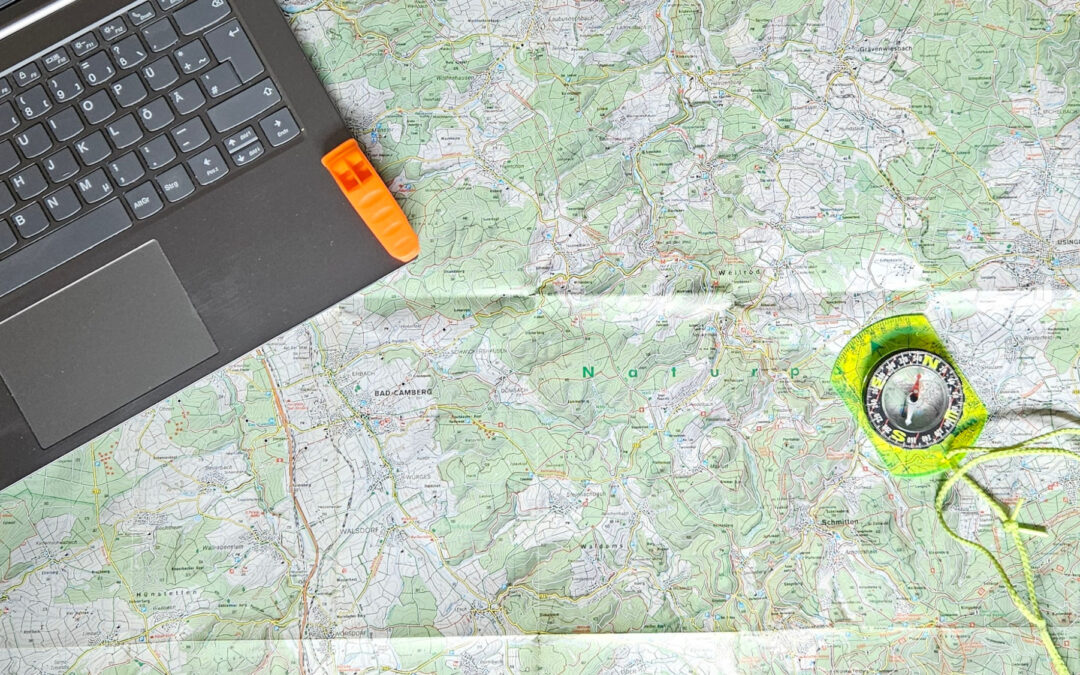
Small items like a map and compass can be helpful to avoid losing your way in unfamiliar surroundings.
If your navigation relies on your smartphone, then bring a power bank and a charging cable that you’ve checked to work. Even then, it’s always wise to have a map in your backpack in unfamiliar terrain or uncertain weather conditions—just in case the technology acts up, which it usually does exactly when you really, really can’t afford it.
If the route involves steep climbs or prolonged descents, trekking poles can be a good choice.
If you need more details on the equipment for your day hike, continue reading in What do you need for a day hike?.
Hiking Together
Hiking with others is always a good idea, even if you are an experienced hiker. However, as a beginner, you stand to benefit significantly from walking with more seasoned hikers. They can offer tips that accelerate your progress. After all, there’s no need to make every mistake yourself when others have already made them and can tell you about it.
Setting out with at least one other person also has the obvious advantage that one can assist or (hopefully) seek help if something happens to the other. However, company on the trail isn’t for everyone.
But whether alone or in a group, make sure someone always knows where you are, the route you plan to take, and when you intend to return. Also, they should know when to alert emergency services. And, of course, make sure to check back in as soon as you return.
Enjoy the View
When finalising your hike planning, ensure you allocate enough time for highlights such as a sunset, stunning views, or spectacular landscapes. Or even for a spontaneous chat with other hikers. What’s the point of the most beautiful hike if you don’t have time to enjoy it?
Hiking should be more than just physical exercise. It is an opportunity to clear your mind and shake off the stress of everyday life, surrounded by breathtaking beauty—not to add to your stress.
A successful day hike requires careful planning, but it is well worth the effort. A well-planned day hike gives you valuable time to experience nature, breathe fresh air, and clear your head. By following these tips, you’ll be better prepared for your next day hike and, hopefully, enjoy it more. And if you’re looking to take on a bigger challenge next, consider how to plan a multi-day hike!
Get out there and happy hiking!